Why Are Businesses Searching for Better Clockify Alternatives in 2026?

Are businesses finally moving beyond traditional time-tracking tools? Many growing companies are asking that exact question as remote work, hybrid teams, and productivity monitoring become more advanced. While basic time logging still matters, organizations now want deeper visibility, better analytics, and stronger workflow automation. That is why many decision-makers are actively researching clockify alternatives that offer more than simple attendance tracking.
From startups managing distributed employees to enterprises handling complex operations, modern teams prefer platforms that combine accountability with operational intelligence. Businesses also expect flexible integrations, transparent reporting, and easier workforce management without creating unnecessary pressure on employees.
The Shift Toward Smarter Workforce Management
Traditional time-tracking systems were originally designed to record hours worked. Today, companies require far more than that. Managers want actionable insights that help improve productivity, identify inefficiencies, and optimize workflows.
Modern workforce tools now focus on:
Productivity visibility
Task tracking
Workflow automation
Team collaboration
Performance analytics
Remote employee management
Project transparency
Businesses operating remotely especially benefit from systems that provide accurate operational oversight while maintaining employee trust. This balance has become increasingly important as companies scale their teams globally.
Why Traditional Time Tracking Alone Is No Longer Enough

Many organizations discover limitations after relying on basic tools for extended periods. While logging work hours may solve one problem, a performance tracking system provides the complete operational visibility that businesses often need.
Some common challenges include:
Limited Productivity Insights
Tracking hours does not always explain how efficiently work gets completed. Managers often need clearer data regarding application usage, workflow patterns, and project bottlenecks.
Lack of Advanced Reporting
Growing businesses require customizable reports that support smarter business decisions. Basic summaries may fail to provide meaningful operational insights.
Scalability Issues
As organizations expand, they often require systems that adapt to larger teams, multiple departments, and evolving workflows without becoming difficult to manage.
Minimal Automation Features
Manual processes consume valuable administrative time. Businesses increasingly prefer platforms that automate repetitive tasks and simplify reporting.
Features Businesses Prioritize in Modern Productivity Platforms
Organizations searching for workforce management software usually compare several critical capabilities before investing in a platform.
Real-Time Monitoring
Real-time activity tracking helps managers understand workflow efficiency without constantly interrupting employees for updates.
Detailed Analytics
Advanced analytics help identify productivity trends, project delays, and operational gaps. These insights often support better planning, resource allocation, and a more effective work plan.
Employee-Friendly Transparency
The best platforms prioritize transparent monitoring practices. Ethical tracking policies help maintain trust between management and employees.
Integration Capabilities
Modern businesses rely on multiple software solutions simultaneously. Productivity tools that integrate with communication platforms, CRMs, and project management systems simplify daily operations.
Customizable Dashboards
Different departments need different insights. Flexible dashboards allow businesses to personalize reporting according to operational priorities.
Common Mistakes Businesses Make When Choosing Productivity Software
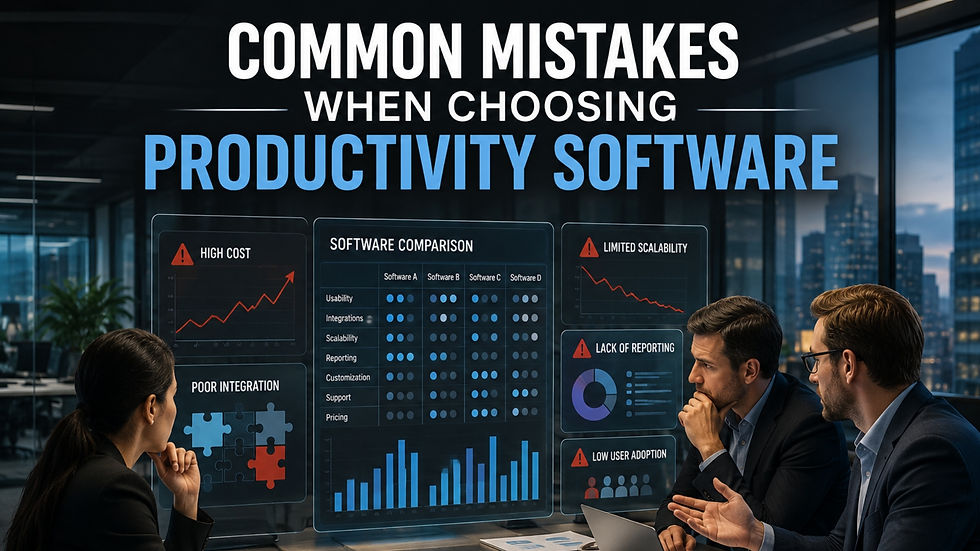
Selecting the wrong platform can create operational frustration and reduce adoption rates across teams. Businesses should avoid several common mistakes during the evaluation process.
Focusing Only on Price
Affordable software may appear attractive initially, but limited features often create long-term inefficiencies. Businesses should evaluate overall operational value instead of choosing purely based on cost.
Ignoring Scalability
Some tools perform well for small teams but struggle as operations expand. Businesses should always consider future growth before making a decision.
Overlooking User Experience
Complicated interfaces reduce employee adoption and increase training time. User-friendly systems usually deliver stronger long-term productivity outcomes.
Choosing Features Teams Never Use
Overloaded platforms with unnecessary features may complicate workflows rather than improve them. Businesses benefit more from practical functionality aligned with real operational needs.
You can also watch: EmpMonitor: All-In-One Workforce Management Solution | Employee Monitoring Software
Conclusion
Businesses exploring clockify alternatives are no longer searching only for time trackers. They want smarter platforms that improve visibility, streamline workflows, and support modern operational demands. The shift toward advanced workforce management reflects changing expectations in remote collaboration, productivity monitoring, and business transparency.
Companies that prioritize scalability, reporting accuracy, ethical monitoring, and operational flexibility usually achieve stronger long-term efficiency gains. Before selecting any platform, evaluate your team structure, operational goals, and future growth requirements carefully. The right solution should support both productivity and employee experience while helping businesses operate with greater clarity and confidence.
FAQs
What are the main benefits of workforce productivity software?
Workforce productivity software improves workflow visibility, accountability, reporting, and team efficiency. Many platforms also support remote collaboration, analytics, and project management for growing businesses.
How much does employee monitoring software usually cost?
Costs vary based on features, team size, and reporting capabilities. Basic plans are affordable for small teams, while advanced enterprise solutions typically require higher monthly investments.
What mistakes should businesses avoid when choosing productivity tools?
Businesses should avoid focusing only on price, ignoring scalability, or selecting overly complex systems. Prioritizing usability, transparency, and practical features usually delivers better results.


Comments